
Plenty of homes have no real entryway. The front door opens straight into the living room, or into a hallway so narrow that two people cannot pass. Shoes pile up, keys go missing and coats end up draped over the nearest chair.
In this post
You do not need a mudroom to fix this. A small entryway only has to do four jobs: hold shoes, hold coats and bags, catch keys and mail, and give you a quick look in a mirror on the way out. These 14 small entryway ideas cover each of those jobs in very little space.
Coats and bags
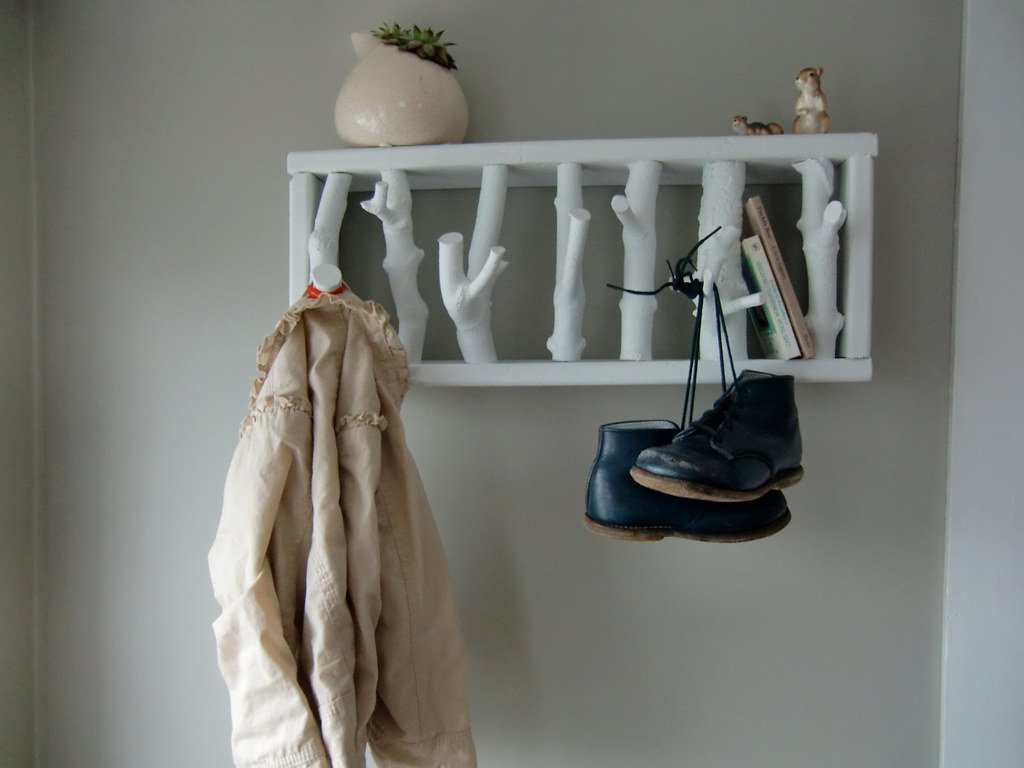
1. Swap a coat rack for a row of wall hooks
Freestanding coat racks take up floor space and tip over when they are loaded on one side. A row of wall hooks holds the same coats flat against the wall. Hang them at two heights if you have kids, so they can put their own things away.
$15–$50
2. Choose a hook rail with a shelf on top
A hook rail with a small shelf above gives you a spot for hats, gloves or a plant. It is a lot of storage for about two feet of wall.
$30–$80
3. Use an over-the-door hook rack
If you rent and cannot drill, an over-the-door rack on the coat closet or front door (if it has enough clearance) adds hooks without any holes. Check that the door still closes properly before you load it up.
$15–$35 Renter-friendly
Shoe storage
4. Pick a slim shoe cabinet
Tilt-out shoe cabinets are often only 7 to 10 inches deep, so they fit in hallways where a regular cabinet would block the way. Shoes disappear from view and the top becomes a landing spot for keys. Anchor tall cabinets to the wall so they cannot tip.
$70–$200
5. Add a bench with storage underneath
A bench gives you somewhere to sit while you put on boots, and the space below holds shoes or baskets. Look for one around 14 to 16 inches deep for a small entry.
$60–$180 Renter-friendly
6. Set a boot tray by the door
In wet or snowy months, a rubber or metal boot tray keeps mud and salt off the floor. It is cheap, it is easy to rinse, and it quietly saves your floors.
$10–$30 Renter-friendly
7. Store off-season shoes somewhere else
The entryway only needs the shoes you wear this week. Sandals in winter and snow boots in summer can live in a closet or under the bed. This one simple rule can halve the pile.
Free
Keys, mail and the drop zone
8. Add a small floating shelf or wall organizer
A narrow shelf or wall-mounted organizer with key hooks and a mail slot stops the “where are my keys” scramble. Put it right next to the door, at hand height, so using it becomes automatic.
$20–$50
9. Use a console table only if it is very narrow
A console table can work in a small entry if it is about 10 to 12 inches deep. Any deeper and it starts blocking the doorway. Put a tray on top for keys and sunglasses, and a basket underneath for shoes.
$60–$200 Renter-friendly
10. Give each person a basket or bin
One basket per person for hats, gloves, dog leashes and school things keeps the mess contained and makes it clear whose stuff is whose.
$15–$40 Renter-friendly
Make a small entryway feel bigger
11. Hang a mirror
A mirror bounces light around a dark hallway and lets you check yourself before you leave. A round mirror softens a narrow space; a tall one makes a low ceiling feel higher.
$30–$120
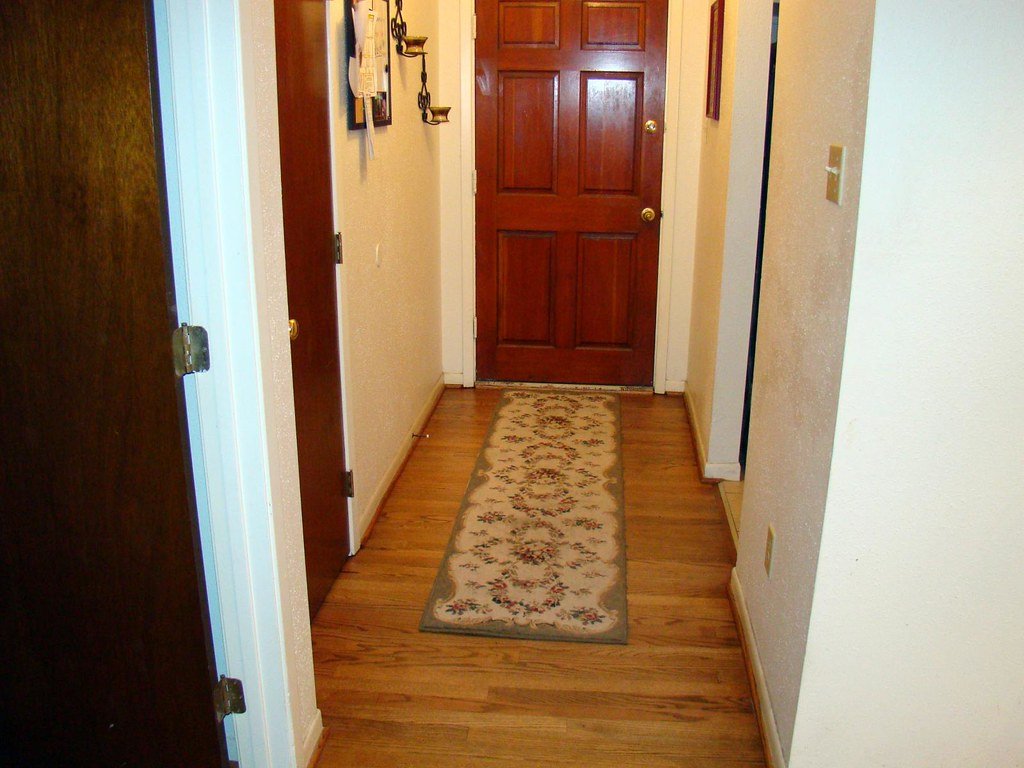
12. Lay down a washable runner
A runner defines the entry and protects the floor. Choose a low-pile, washable one with a non-slip pad underneath, so it does not catch the door or slide when someone walks in fast.
$25–$80 Renter-friendly
13. Brighten it with a plug-in sconce
Entryways are often the darkest spot in a home. A plug-in wall sconce adds warm light without an electrician, and the cord can be hidden with a paintable cord cover.
$30–$90 Renter-friendly
14. Create a “fake” entry with a rug and hooks
If your front door opens straight into the living room, a rug, a row of hooks and a slim bench are enough to mark out an entry zone. A bookshelf placed side-on can also act as a partial divider.
$80–$250
Quick tips
- Leave at least 36 inches of clear walkway where you can.
- Keep deep furniture out of the door swing.
- Anchor tall shoe cabinets and shelves to the wall.
- Do a 5-minute reset once a week: return stray shoes and recycle old mail.
Frequently asked questions
How do I make an entryway in an apartment with no entry?
Mark out a zone with a washable rug, add wall hooks and a small bench or shoe cabinet, and hang a mirror. A bookshelf turned sideways can act as a divider between the door and the living area.
What can I put in a narrow entryway?
Choose shallow pieces: wall hooks, a floating shelf, a slim tilt-out shoe cabinet around 7 to 10 inches deep, and a mirror. Avoid deep tables or freestanding coat racks.
How do I store shoes in a small entryway?
Use a slim shoe cabinet or a bench with baskets underneath, keep only this week’s shoes by the door, and store off-season pairs elsewhere.
More small-space ideas
- Small apartment decorating ideas
- Laundry room ideas for small spaces
- Small kitchen ideas
- All Small Spaces ideas
Prices are rough US ranges at the time of writing and will vary by store and region.

1 comment